
What are the three skill trees?
Swordmastery, Witchcraft, and Vampirism — shared XP and skill points, different unlock rules.

The Blood of Dawnwalker progression runs on one shared experience bar and one shared skill-point pool split across three trees: Swordmastery (physical sword tech usable day or night), Witchcraft (hexes and rune magic, mostly human daytime), and Vampirism (claw powers, mobility, and feeding tools gated by Corruption). Perks are passive nodes; abilities are actives you slot on the hot bar. Many Swordmastery and Witchcraft nodes need manuals found in the world or bought from trainers; Vampirism nodes unlock as you drink blood and deepen Corruption. Spending points at wayside shrines can consume hourglass segments — budget before a grind session. Verified September 3, 2026 · Steam.
Public materials cite roughly 22 Swordmastery perks plus 7 abilities, 31 Witchcraft nodes (21 passive, 10 active), and a growing Vampirism branch whose exact totals may shift with patches. This page names verified abilities from preview and launch coverage without inventing damage numbers or point costs.
| Fact | Detail |
|---|---|
| Trees | Swordmastery · Witchcraft · Vampirism — not separate classes |
| Shared pool | One XP bar · one skill-point currency across all three |
| Swordmastery gate | Manuals from soldier camps, loot, sword trainers, blacksmiths |
| Witchcraft gate | Magic manuals — ruins, haunts, witches, Ancient Circles |
| Vampirism gate | Corruption from drinking blood; some nodes need vrakhiri blood |
| Shrine spend | Level-up and skill investment; may cost time segments |
| Form rules | Hex actives human-day only · claw actives night · sword both |
| Related | Combat Activation · Day/night forms · Skill planner stub |
Matched by build plan, shared topics, and guide progression — not random related links.
Rebel Wolves frames Swordmastery, Witchcraft, and Vampirism as parallel growth paths for Coen — not a class picker at character creation. Every enemy kill, quest payout, and discovery feeds the same experience meter; every level grants points you may place in any tree that has its unlock requirements satisfied. That freedom is the build game: a sword-first Dawnwalker can still pick up Ravenous Flock later; a hex mage still wants a few anytime perks before the first vampire night.

| Tree | Combat role | Typical form | Unlock style |
|---|---|---|---|
| Swordmastery | Directional sword tech, ripostes, charges | Day and night | Manuals + skill points |
| Witchcraft | Hex damage, control, buffs, soul tools | Actives human-day; some perks anytime | Magic manuals + skill points |
| Vampirism | Claws, bites, shapeshift, burst mobility | Night actives and perks | Corruption + skill points |
Perks passively modify stamina, damage, slot counts, or defensive windows. Abilities are active skills — Dirty Trick, Ravenous Flock, Shadowstep — assigned to quick slots and paid with Activation charges in combat (see combat). Swordmastery is the only tree whose abilities work in both human and vampire form because Coen keeps using swords after dark; Witchcraft actives require human form and intact rune scars; Vampirism actives require night form.
Witchcraft’s perk columns include nodes marked for day and night use — sun-and-moon icons in the UI — while hex abilities stay human-only. Vampirism perks are night-only. If you are still in the prologue or early Laslea with long human quest chains, dumping every point into night-only nodes leaves dead value until sunset. Spread early points into Swordmastery or anytime Witchcraft columns until your route mix is clear.
The 30-day sandbox punishes one-tree tunnel vision: you need human dialogue and hex tools by day, claw sustain and vertical routes by night. Shared points encourage hybrid builds; “pure” trees are roleplay constraints, not system bonuses. The skill planner stub will eventually validate legal paths — until node data is wired, use this page plus in-game alerts after reading manuals.
Swordmastery and Witchcraft nodes often show a small book icon on the skill tree until you own and read the matching manual in inventory. Reading does not spend skill points — it only unlocks the node for purchase at a shrine. Manuals land under Manuals & Recipes tabs; easy to miss after a long fight.
Public play reports tie sword mastery manuals to soldier camps (clear the camp, loot the tent chest), blacksmith vendors, and sword trainers discovered in the open world — at least one trainer sits on the northern half of the map in community footage. Bandits and soldiers also drop manuals as random loot. If you main directional sword, camp sweeps are your most repeatable source before you reach Svartrau’s formal vendors.
Magic manuals appear in ancient ruins, haunted sites, witch vendor stocks, and the Ancient Circles daytime activity — circles consistently pay witchcraft manuals in early player testing. Anca ties into Coen’s rune scars narratively; her quests and region are the natural hub for hex players. Manuals gate both perks and actives such as Burning Blood or Compel Soul — without the book, the tree shows a locked icon regardless of level.
Workflow: pick up manual → read from inventory → skill menu shows an alert on the newly unlocked node → travel to wayside shrine → confirm hourglass preview if shown → spend points. Selling unknown manuals is a common mistake — stash until you identify duplicates on equipment or this page’s named-ability list.
Vampirism ignores the manual book system for most nodes. Instead, Corruption rises when Coen drinks blood — especially from living sources — and higher Corruption tiers unlock deeper tree branches. Night abilities consume health and Corruption as their primary costs in preview materials; exact per-skill numbers remain unverified here.

Feed on defeated enemies, animals, blood vials, or — highest Corruption gain — humans. Feeding while already at full health may accelerate Corruption further in community testing. That power trades against Blood Hunger frenzy near civilians and quest givers (day and night). Vampirism is the only tree where morality and mechanics share a meter.
Launch tips cite three Vampirism abilities that require drinking vrakhiri blood specifically — tied to the Court system and named vampire officers rather than random wolves. We avoid spoiler steps here; treat them as mid-game gates you discover through Court progression, not prologue goals.
With no respec at launch, Corruption-heavy routes commit you to night predation fantasies for the whole save. Low-Corruption players can still take mobility basics — community footage highlights Shadowstep as a reposition tool behind locked-on targets — but burst nodes like Blood Surge or Vrakhiri Might expect you to embrace feeding. Plan on walkthrough pacing before you spike Corruption in Laslea.
Wayside shrines are the only safe place to invest skill points, respec-adjacent inventory management, and fast-travel stash access. Official and community materials agree: leveling up and unlocking skills can advance the story hourglass — not every node on every visit, but enough that blind shrine grinding burns rescue days.
| Shrine action | Advances clock? | Planning note |
|---|---|---|
| Stash deposit / fast travel | No — routine hub stop | Use between quests without penalty |
| Spend skill points (when UI shows hourglass) | Yes — segment cost preview | Batch several unlocks in one visit if possible |
| Level-up notification pending | Often tied to same visit | Read preview before confirming |
| Free exploration en route | No | Travel to shrine without quest accept |
If the UI offers a segment cost once per shrine visit, queue multiple manual unlocks before you travel — read books at camp, note alert icons, then spend several points in one trip instead of ping-ponging shrines across days. Pair with time system rules: exploration does not tick time, but shrine confirmation may.
You can grind XP in free roam without advancing Coen’s calendar, then spend points in a controlled shrine session. The mistake is treating “I need levels” as permission to ignore hourglass previews — segments are the scarce resource, not XP.
The tables below list names surfaced in official bulletins, preview coverage, and verified launch guides. No damage numbers, point costs, or cooldown seconds — those belong in a future database pass after structured capture.
| Tree | Named abilities (public sources) | Named perks / examples |
|---|---|---|
| Swordmastery | Dirty Trick · Charge · Omniblock · Perfect Riposte · Counterattack | Stinging Blade (weapon damage) · slot-expand perks TBA |
| Witchcraft | Ravenous Flock · Burning Blood · Mercurial Fervour · Compel Soul · Astral Communion · Cycle of Ruin | Forbidden Sigils (+hex slots, up to four) · anytime columns TBA |
| Vampirism | Voracious Bite · Piercing Shriek · Shapeshift / Wolf Form · Blood Surge · Shadowstep · Vrakhiri Might | Night-only passives · three vrakhiri-blood gates |
Community mastery advice stacks Perfect Riposte with Counterattack: a perfect block reveals a critical attack direction (red arrow on the opponent) that you can delay slightly before striking. Omniblock aligns with accessibility omni-assist on combat. Charge and Dirty Trick add aggression tools once blocking reads are stable — order matters more than raw tree depth.
Ravenous Flock appears in early loadouts as the default single hex slot — bird swarm AOE with stun in preview text. Burning Blood and Mercurial Fervour (also spelled Favor in some sources) point at DOT and haste buffers. Compel Soul and Astral Communion tie into Coen’s afterlife interrogation fantasy — human-day investigation routes on walkthrough. Cycle of Ruin reads as a longer combo finisher; verify manual location before you plan around it.
Voracious Bite and Piercing Shriek cover sustain and ranged pressure. Wolf Form and Shapeshift handle overworld speed — pair with night exploration on locations. Blood Surge preview text mentions explosive finishers on enemies. Shadowstep teleports behind your lock-on target at a stamina cost — usable in combat, not just traversal. Vrakhiri Might sits in the high-Corruption fantasy alongside officer hunts.
Early Laslea and Briar Sloughs reward reliable defense and form-agnostic perks over flashy night spikes. Use the table as a priority sketch, not a mandatory build — quest choices and weapon finds still matter more than perfect theory.
| Priority | Suggested nodes / goals | Why early | Defer until |
|---|---|---|---|
| 1 | Perfect Riposte + Counterattack (Swordmastery) | Scales with tutorial blocking | Heavy Charge play without stamina discipline |
| 2 | Anytime Witchcraft perk column | Value on human days you cannot hex | Forbidden Sigils if you only have one hex manual |
| 3 | First hex active (e.g. Ravenous Flock) | AOE solves prologue groups | Second hex before slot perks |
| 4 | Stinging Blade or weapon-damage perk | Multiplies riposte crits | Great sword before you learn blocks |
| 5 | Shadowstep or Wolf Form (Vampirism) | Night traversal + escape | Blood Surge before feeding discipline |
| 6 | Forbidden Sigils (Witchcraft) | Second hex slot | Until you own two witch manuals |
| 7 | High Corruption burst nodes | Boss damage | You accept human feeding consequences |
If combat still feels shaky, invest Swordmastery defensively before Witchcraft actives. Directional enemies appear in the prologue; riposte perks multiply tutorial skills instead of adding new inputs. Pick one weapon family on equipment and align perks — great swords want fewer, heavier riposte windows; short swords reward faster resets.
Prioritize Ancient Circles and Anca-adjacent content for manuals, grab Forbidden Sigils once you have two hex books, and keep at least one anytime perk so human nights (when scars heal) still grant passive value. Slot Ravenous Flock for groups; swap to Burning Blood on elites when slots allow.
Feed safely on animals before you touch human blood, unlock Shadowstep for fight repositioning, and add Wolf Form for segment-efficient travel between shrines. Delay Vrakhiri Might until Court content explains vrakhiri blood — rushing Corruption in Laslea complicates dialogue-heavy day quests.
After you purchase an ability at a shrine, it appears in the active abilities menu outside combat. Only abilities with a green check are live. The UI splits slots: Witchcraft top, Swordmastery middle, Vampirism bottom — configure separate day and night layouts before boss fights.
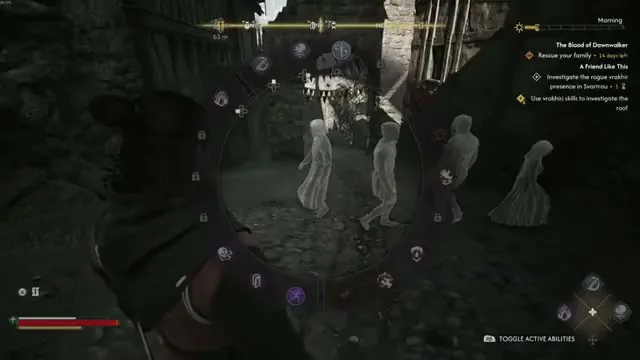
| Slot expander | Tree | Effect (public descriptions) |
|---|---|---|
| Forbidden Sigils | Witchcraft | Up to +4 hex active slots |
| Tree-specific slot perks | Swordmastery | More sword actives on wheel (names TBA) |
| Tree-specific slot perks | Vampirism | More claw actives on wheel (names TBA) |
| Default early layout | All | Often 1 hex · 3 sword · 3 claw before expanders |
Assign combat abilities to the hot bar for mid-fight access. The weapon wheel does not fully pause combat — menuing under pressure gets you hit. Keep one reliable spend per form plus a weapon ability from gear (combat covers cooldown-only weapon skills).
Unslot Ravenous Flock for Burning Blood freely if you only have one hex slot — slot expanders remove that trade-off. Passive perks remain purchased; only active wheel assignments change. Test night claws on a bandit camp before you commit a multi-segment main quest at dusk.
Beyond the three trees, public materials reference Blood mutations — permanent traits from draining named vampires — and Sacred Stones / Uriashi glyphs tied to the A Pilgrimage for Power quest chain. These sit adjacent to normal skill points: collection and story gates, not shrine manuals.
Hunting named vampires and draining them unlocks mutation-style bonuses separate from spending points on Vampirism nodes. Exact mutation names and stacking rules are TBA on this wiki until captured in-game. Treat them as mid-to-late power spikes that reward Court officer progression — cross-link quests when rows exist.
A Pilgrimage for Power and regional variants (e.g. Bear Trouble in Laslea Glen materials) gate Sacred Stone rewards and Uriashi-adjacent lore. These are exploration spikes, not early prologue goals. Do not confuse them with everyday shrine spends — pilgrimage beats may carry their own hourglass costs on the quest journal.
Most skill regrets are permanent point spends or segment taxes, not broken builds.
| Mistake | Cost | Fix |
|---|---|---|
| Max night-only perks before feeding routes | Dead value on human days | Buy anytime/Swordmastery first |
| Unread manuals in inventory | Points with nothing to buy | Check Manuals tab after every loot |
| Shrine spend without hourglass read | Lost rescue segments | Preview on time system |
| Selling duplicate manuals | Re-buy or re-find gate | Stash until identified |
| One wheel for both forms | Wrong abilities at sunset | Configure day/night active menus |
| Skipping slot expanders while hoarding actives | Bench full of unlocked hexes | Invest Forbidden Sigils when manuals allow |
Use skill planner as a scratch pad once node data imports — until then, screenshot your tree before major shrine sessions. With no respec, one deliberate hybrid plan beats reactive clicking after every level.
Swordmastery, Witchcraft, and Vampirism — shared XP and skill points, different unlock rules.
Swordmastery and Witchcraft mostly yes; Vampirism uses Corruption and blood drinking instead.
Treat spent points as permanent at launch — plan hybrid routes early.
Shrine investments can show hourglass costs — preview before confirming on time system.
Swordmastery fully; Vampirism actives; Witchcraft actives are human-day only, though some perks are anytime.
A Witchcraft perk that increases hex active slots — up to four in public descriptions.
Vampirism tree — requires Corruption progress and night form; exact point order TBA.
Combat for Activation loops, equipment for weapon scaling, skill planner when wired.
September 3, 2026
Matched by build plan, shared topics, and guide progression — not random related links.