
Is The Blood of Dawnwalker multiplayer?
Single-player only. There is no co-op campaign.

The Blood of Dawnwalker beginner guide: prologue priorities, clock habits, day/night forms, feeding, shrines, manuals, and segment traps. Verified Sep 2026.
First days overview.
~11 min read
The Blood of Dawnwalker is a single-player dark fantasy ARPG from Rebel Wolves, published by Bandai Namco Entertainment, released September 3, 2026. This The Blood of Dawnwalker beginner guide covers the first days in Vale Sangora: who Coen is, what the Dawnwalker dual form means, how the 30-day rescue clock actually behaves, and where to spend your earliest segments without panic. Verified September 3, 2026 · Steam.
| Fact | Detail |
|---|---|
| Platform | PC (Steam · GOG · Xbox PC) · PS5 · Xbox Series X|S |
| Mode | Single-player only |
| Protagonist | Coen of Laslea — fixed appearance, no character creator |
| Story clock | 30 days & 30 nights (story clock) |
| Real playtime | Roughly 50–70 hours (reported) |
| Achievements | 46 Steam achievements |
| Genre | Action RPG · Dark fantasy · Narrative sandbox |
Matched by build plan, shared topics, and guide progression — not random related links.
You play Coen, a Slav peasant from Laslea in the fictional kingdom of Vale Sangora, set during a plague-ravaged 14th century. His family — father Pieter, siblings including Lunka, and mother Esme — lives under vampire rule after Brencis and the vrakhiri seized power. Public materials describe no traditional character creator: Coen’s look and backstory are fixed, so build anxiety should focus on skill trees and gear, not respecing a face.
The inciting crisis is personal. Brencis attempted to turn Coen into a vampire; exposure to mine silver left Coen immune, and the ritual failed in a way the court believes was fatal. Coen survives as a Dawnwalker — human by day, vampire by night — with 30 days and 30 nights to rescue his family before Brencis’s investiture sacrifice. That deadline is the narrative spine; it is not a real-time countdown on your wall clock.
The campaign is single-player only. Rebel Wolves frames it as a narrative sandbox inspired by tabletop RPGs: you choose which quests to pursue, often in day or night variants, and consequences ripple through reputation scales and the Brencis Court web. You will not finish every branch in one run — the beginner goal is to learn systems, not to solve the whole saga on day three.
Anca, a local witch and confidant, ties into Coen’s Witchcraft hexes — runes carved into skin that only work in human form because vampire nights heal the scars. Laslea villagers, blood-tax rituals, and early vrakhiri patrols set the tone before you range into Briar Sloughs and Svartrau. Treat NPC names as future quest anchors, not background fluff.
The prologue runs scripted quests such as *All Good Things*, *Withering Away*, *Like Father, Like Son*, *Sacred Covenant*, *Bad Blood*, and *Smoke and Ashes*. They introduce directional combat, feeding pressure, and the hourglass UI. The 30-day rescue clock officially starts once you reach the open world after that block — not during every prologue beat. Until then, follow markers and read every tutorial prompt about blocking direction and form swap.
| Early priority | Why it matters now | Can wait |
|---|---|---|
| Learn hourglass UI | Quest acceptance shows segment cost before you commit | Perfect route planning |
| Anytime perks in skill trees | Sun-and-moon perks work in both forms; no respec at launch | Min-max Corruption |
| One weapon family comfort | Short, long, and great swords feel different; pick one to learn | Collecting every unique |
| Shrine stash habit | Central storage prevents inventory clog on timed routes | Full map completion |
| Blood Hunger plan | Night routes fail if you frenzy near quest givers | Stealth mastery |
Community play reports suggest the sandbox is more lenient than the prologue implies. Early days are for sampling combat camps, side quests, and perk choices — not for min-maxing every segment. Accept that you are learning three skill trees, two forms, and a quest web; rushing the main spine before you can block reliably wastes more time than one extra side quest.
Once you can swap forms deliberately, read the hourglass on main quests, and feed safely at night, start alternating walkthrough beats with regional side content. If a quest icon shows multiple segments, finish consumables and stash junk at a shrine first — see time system for what advances the clock.
Treat 30 days & 30 nights as a story budget, not a speedrun timer. Plot-affecting actions — accepting or completing quests, some skill unlocks at shrines — consume time segments. Wandering the open world, observing scenes, and non-intervention exploration do not advance time. That split is the most important habit to internalize before you blame the game for “running out of days” while sightseeing.
| Player action | Usually advances clock? | Beginner note |
|---|---|---|
| Free roam and looting | No | Use this to learn map layout without penalty |
| Accept or finish a flagged quest | Yes | Hourglass preview appears before confirm |
| Spend skill points at shrine | Often yes | Budget segments before a grind session |
| Optional side quests (some) | Varies | Verify icon — some report zero cost |
| Talking without quest commit | No | Shop and lore unless dialogue triggers a job |
New players often finish the prologue believing every action drains the rescue window. In practice, the first several in-fiction days reward experimentation. Side quests, soldier camps, and perk tests teach systems; panic-spending segments on the main path alone leaves you under-leveled for Brencis’s lieutenants later. When you do tighten planning, open quests for verified hourglass rows.
This wiki’s time planner stub will eventually simulate remaining segments; until rows are verified, use the in-game hourglass and the time system page as your reference pair.
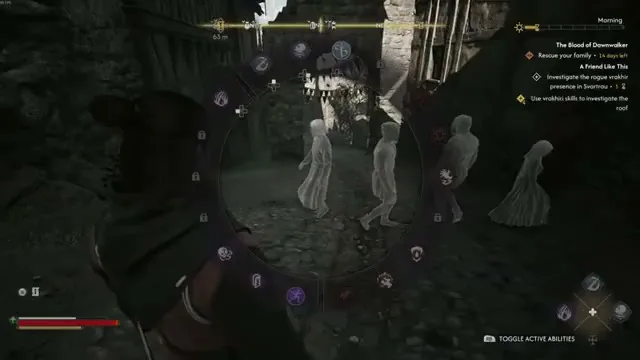
Coen’s human day form favors swordplay, dialogue, and Witchcraft hexes. Vampire night form adds claws, wall-walking, Shadowstep, Wolf Form, and stealth routes — at the cost of Blood Hunger. Most quests can be taken in either phase, but combat feel, NPC availability, and pathing differ enough that you should read the dedicated page before you commit a multi-segment route at dusk.
| Form | Combat kit | Exploration edge | Risk |
|---|---|---|---|
| Human day | Directional sword + hexes | NPC dialogue, non-violent options | Hex scars heal at night — no magic then |
| Vampire night | Claws, bite heals, powers | Vertical routes, rooftops, stealth | Blood Hunger frenzy near civilians |
Combat uses four-direction attacks, blocks, and parries (with optional omni-block and omni-attack assists). Day or night, read enemy wind-ups instead of button-mashing. Early perks that work in both forms — marked with sun-and-moon icons and “anytime” text — are safer investments than night-only vampirism spikes before you understand feeding routes. Full frame talk lives on combat.
Armor and weapons support day sets and night sets. Equip before you leave a shrine; swapping mid-route is possible but easy to forget when a quest timer is not actually ticking. Consumables such as blood vials matter more at night; food and tonics support human days where passive healing is limited.
Wayside shrines are the backbone of early progression: fast travel, central stash, level-up and skill spend, and sometimes time-segment costs when you invest points. Make a shrine visit the bookend of every outing — dump loot, review manuals, confirm hourglass costs before you confirm skill nodes.
Crafting exists (menu shortcut T in public materials), but full recipe tables are still being verified on this wiki. The beginner rule is simple: pick up recipe items, read them once, then craft at safe hubs. Enhancement elixirs may last for specific segment counts — check item text before you pop one at the wrong phase of a day.
Weapon families — short swords, long swords, great swords, axes — differ in speed and reach. Pre-order Sangorian Wayfarer’s Armor is cosmetic progression, not a power shortcut. Detailed comparisons sit on equipment once drop data is confirmed.
Three trees — Swordmastery, Witchcraft, and Vampirism — share one experience bar and skill-point pool, but unlock rules differ. Sword manuals drop from soldiers or vendors; witch manuals hide in haunts and vendor stocks; vampirism nodes often need Corruption from drinking blood. Launch builds treat spent points as permanent — lean on dual-form perks until you know your fantasy.
| Tree | When it shines | Unlock gate | Form lock |
|---|---|---|---|
| Swordmastery | All-day weapon tech | Manuals from camps or sellers | Day and night |
| Witchcraft | Control, hex damage, buffs | Magic manuals in ruins / shops | Abilities human-only; some perks anytime |
| Vampirism | Mobility, claws, burst | Corruption and blood | Night abilities; high frenzy risk |
Looted manuals and recipes land under dedicated inventory tabs — easy to miss after a long fight. Read a manual from inventory to unlock the node; the skill menu shows an alert on the matching perk, but you still spend points at a shrine, which may cost segments. Cross-check skills before you burn a day on grinding.
Unlocked abilities appear in the active-ability menu outside combat. Only perks with a green check are live on your wheel; slot limits rise from tree-specific perks such as Forbidden Sigils on Witchcraft. Configure separate day and night wheels — four slots per form is a common early layout — before you enter a boss arena.
Use this table as a pre-route checklist. Most failures are system misunderstandings, not difficulty spikes.
| Mistake | Why it hurts | Fix |
|---|---|---|
| Stacking quests without reading hourglass | Burns multiple segments on overlapping travel | One major job at a time until costs are familiar |
| Assuming exploration costs days | Unnecessary stress; avoids learning the map | Re-read time system — roam is free |
| Maxing night-only perks first | Dead points during human-heavy story beats | Buy sun-and-moon perks until build is clear |
| Ignoring Blood Hunger | Frenzy can kill quest givers | Feed on animals, enemies, or vials before city work |
| Forgetting to read manuals | Skill points with nothing to buy | Inventory → Manuals after every dungeon |
| Selling unknown key gear | Some items gate quests or crafting | Stash first; verify on equipment |
| Skipping block tutorial | Directional bosses wall you | Enable omni-assists temporarily on combat |
| Night-only route for dialogue quest | NPCs and non-violent paths often want day | Check quest journal for form hints |
Before you accept any flagged quest, open the hourglass preview, note segment cost, and ask whether the same goal is cheaper in the other form or on a free-roam prep pass. Two seconds there beats reloading after a starving vampire night in Svartrau.
You now know who Coen is, what the first days reward, and which mistakes are system errors rather than skill gaps. Continue in this order if you want the smallest spoiler surface:
1. Time system — segments, hourglass math, Sanzhana stretch notes, playtime vs story clock.
2. Day and night — Blood Hunger, stealth, Shadowstep routes, quest variants.
3. Combat — directional sword, claws, Activation charges, executions.
4. Walkthrough — prologue-to-Court spine when you are ready for spoilers.
Return to the guides hub for the full card index or wiki hub for database pages.
Single-player only. There is no co-op campaign.
Public materials describe a fixed protagonist — no full character creator at launch.
After the prologue, when the open world opens — not from the first cutscene.
No. Only plot-affecting actions such as quests and some skill spends advance segments. Details on time system.
Roughly 50–70 hours (reported) for a thorough run — separate from the in-story 30-day limit.
Treat skill points as permanent at launch; pick anytime perks until you are sure.
Time system, then day and night and combat.
September 3, 2026
Matched by build plan, shared topics, and guide progression — not random related links.