
What weapons are confirmed in The Blood of Dawnwalker?
Short swords, long swords, great swords, and axes — plus additional pickups such as tools teased by developers. Ranged weapon focus is not confirmed as a core loop.

The Blood of Dawnwalker gear is built around directional sword combat by day, claw and mobility kits by night, and inventory habits that respect the 30-day segment clock. This The Blood of Dawnwalker equipment page covers confirmed weapon families, separate Day Set and Night Set armor, consumables, shrine storage, and preorder cosmetics — without inventing full stat spreadsheets or fake tier lists. Verified September 3, 2026 · Steam.
Official materials and launch-week community footage agree on the shape: short, long, and great swords trade speed for reach; axes and other pickups exist; armor is customized per form; and wayside shrines centralize stash access alongside fast travel and skill spends. Exact drop tables, every unique name, and per-item damage numbers stay TBA until this wiki completes structured loot passes.
| Fact | Detail |
|---|---|
| Confirmed swords | Short sword · long sword · great sword — speed and reach differ |
| Other melee | Axes and additional pickups (e.g. pickaxe mentioned in dev materials) |
| Armor | Separate Day Set and Night Set with different stats and effects |
| Head slot | No helmets — confirmed in public developer AMA |
| Preorder gear | Sangoran Wayfarer’s Armor Set — early unlock; obtainable in-game later |
| Storage | Central stash at wayside shrines |
| Consumables | Food · tonics · blood vials — human days especially food-dependent |
| Related | Combat · skills · day and night |
Matched by build plan, shared topics, and guide progression — not random related links.
Rebel Wolves frames daytime combat around Historical European Martial Arts inspiration: four-direction attacks, blocks, and parries where commitment matters. Within that system, short swords, long swords, and great swords are the confirmed core families — each changes swing speed, reach, and how aggressively you can space bandits on Vale Sangora roads.

| Family | Typical feel | Build angle |
|---|---|---|
| Short sword | Faster swings · tighter spacing | Reactive parry players · shorter commitment windows |
| Long sword | Balanced reach and tempo | Default learning blade · pairs with mixed perk trees |
| Great sword | Slower · longer range · heavier poise pressure | Deliberate reads · fewer swings per opening |
Community combat guides note that weapon family choice interacts with stamina, lock-on, and how many swings you safely chain before an enemy counters. Short swords reward staying inside an opponent’s arc; great swords ask you to win on spacing and single heavy answers. None of that replaces reading attack direction — a great sword still loses if you hold block on the wrong line.
Official skill-tree materials describe Swordmastery perks that boost defense, ripostes, mobility, and pressure regardless of blade length, but your weapon still defines baseline swing timing. Cross-reference perk picks on skills after you pick a family you can block consistently with.
Higher-quality swords can roll weapon abilities — cooldown-based specials that do not consume Activation charges and grant brief invulnerability frames during the animation. That makes a mid-tier unique with a strong ability sometimes better than a slightly higher base-damage sword with a weak special. We are not publishing invented damage-per-second tables here; compare blades in-game and note ability utility on combat.
Launch-week beginner advice converges on master one family in Laslea before you hoard duplicates. Manuals, smith upgrades, and segment time all favor sticking with a keeper blade until epics or legendaries appear. When a quest reward offers a new long sword and you trained on short swords, test it on a free-roam bandit camp before you sink upgrade coin.
Swords are the narrative default, but The Blood of Dawnwalker is not sword-only. Pre-launch Community Bulletin posts and preview coverage confirm axes as pickups with their own swing profiles, and developers have teased additional tools such as a pickaxe for world interaction — treat non-sword tools as situational until your save verifies the interaction prompt.
Axes trade the refined parry rhythm of sword families for heavier, often slower strikes. They still participate in the directional combat model, but spacing and stamina windows feel different enough that swapping mid-fight is a conscious choice. Environmental picks — mining or pry-class tools — may matter more for secrets and resource nodes than for duel mastery; verify the icon on your map before detouring a timed quest.
Bandit camps, quest rewards, and named NPC smiths all feed the gear loop. Map icons for blacksmiths and armor smiths appear once you discover vendors; both can improve weapons and armor you already own. This page does not list every named axe or sword — that is future database work — but the rule holds: pick up interactively, stash at shrines, upgrade keepers, sell or store grays when you confirm they are not quest-locked.
Vampire nights replace sword strings with claws and bite sustain. Hand armor at night can grant claw abilities analogous to daytime weapon abilities. Day-form swords do not carry over as your primary night kit — plan Night Set gloves or bracers when claw abilities matter for a boss. Form rules live on day and night.
Armor in The Blood of Dawnwalker is not one universal stat stick. Players customize a Day Set for human routes and a Night Set for vampire routes — separate slots, separate stat profiles, and sometimes different special effects. Forgetting to swap before sunset is a common early mistake: you bring human armor values into a claw fight, or wear night gear during dialogue-heavy town hours without needing the mobility bonuses.
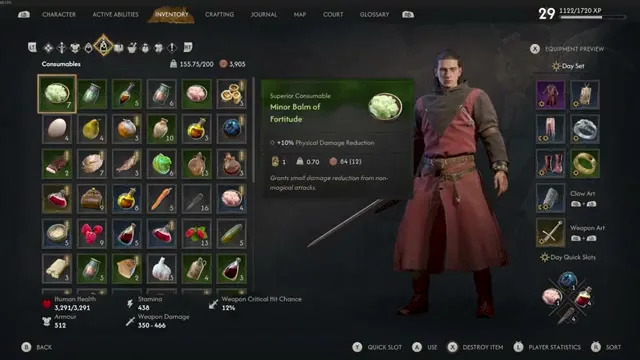
| Loadout | When to wear | Typical focus |
|---|---|---|
| Day Set | Human form · towns · sword quests | Defense vs human enemies · hex synergy · social routes |
| Night Set | Vampire form · rooftops · stealth hunts | Claw abilities · mobility · hunger-heavy routes |
| Swap habit | Before leaving shrine · before accepting multi-segment quest | Avoid mid-route menu panic |
Preview copy and launch guides describe varied stats and effects across pieces, not pure cosmetics. Exact affix names and set bonuses are still being catalogued; we will not invent “+12% slash damage” rows here. The actionable takeaway: maintain two intentional loadouts the same way you maintain separate day and night ability wheels on skills.
Community footage references standout pieces such as Peregrini Aurorae and region-tied quest rewards (for example bracers from early side content). Treat named items as verify in journal entries until the wiki lists sources. A unique with a strong weapon or claw ability often beats spreadsheet-chasing on unknown blues.
Blacksmiths improve blades; armor smiths improve worn pieces. Upgrade costs scale with rarity and level caps tied to Coen’s progression — community tips note max-upgrade shortcuts at vendors when you have coin to burn. Feed one good epic or legendary per form rather than leveling every green drop.
Search traffic occasionally asks whether hidden helmets exist behind deluxe editions. They do not. In a public developer AMA, the team confirmed multiple armor options across body slots but no helmets — a deliberate art and readability choice so Coen’s face and emote-driven storytelling stay visible in cutscenes and town scenes.
Expect chest, leg, glove, and boot-class pieces — plus cloaks or regional sets — rather than skull-enclosed knights. Vampire night armor still changes silhouette and claw VFX without covering Coen’s head. If a vendor UI shows empty head slots, that is working as designed, not a bugged missing item.
Unofficial store mirrors sometimes list cosmetic bundles that do not match Bandai Namco’s edition chart. Cross-check Steam or the official site before buying “helmet DLC.” The verified preorder cosmetic set is Sangoran Wayfarer’s Armor, which follows the same no-helmet rule.
Sangoran Wayfarer’s Armor Set (also spelled Sangorian Wanderer in some previews) is the cross-edition digital preorder bonus. Standard Edition includes the base game plus this set; higher tiers add soundtracks, comics, maps, and physical collectibles without changing the core armor bonus policy.
| Edition | Notable extras (high level) |
|---|---|
| Standard | Base game + Sangoran Wayfarer’s Armor Set (digital preorder) |
| Eclipse | Digital world compendium · comic · soundtrack + preorder armor |
| Day 1 | Steelbook · physical world map + preorder armor |
| Collector’s | Steelbook · large map · Coen figurine · hardcover compendium · Eclipse digital content + preorder armor |
Official store copy states the set is early access — all players can obtain it in-game later. Pre-ordering buys convenience and fashion timing, not a permanent pay-to-win wedge. If you miss preorder windows, note the set for a later vendor or quest source once the community confirms the route; we are not marking a map pin until verified.
Treat Wayfarer’s pieces as traveler-flavored progression gear aligned with Vale Sangora’s road fantasy, not a substitute for learning sword families or shrine stash habits. Beginners should still prioritize food, stash unlocks, and one upgraded keeper weapon over edition anxiety — see beginner guide.
Equipment is not only steel and leather. Consumables — food, tonics, blood vials, and quest-specific items — decide whether a route survives the walk back to a shrine. Human Coen does not passively regenerate health outdoors the way many action RPGs allow; vampire Coen adds Blood Hunger pressure if feeding and vials are ignored.
| Consumable type | Form | Role |
|---|---|---|
| Food / meals | Human day primary | Heal between fights when passive regen is unavailable |
| Tonics / buffs | Mostly human day | Temporary resist or utility — verify recipe sources in-game |
| Blood vials | Vampire night support | Bridge feeding gaps before Blood Hunger spikes |
| Quick slots | Both | Assign with inventory hover + hotkey — do not dig menus mid-fight |
Launch tips recommend assigning quick slot items from inventory before you accept a multi-segment quest. Mid-combat inventory diving wastes the directional combat rhythm and gets you hit while menus are open. Restock at vendors or crafted stations when free exploration still costs zero segments on the time system.
Night sustain loops through bites on defeated enemies, vampires, animals, or — at moral cost — civilians, plus special blood bottles when prey is scarce. Equipment planning must include where you will feed, not just what sword you carry. Unfed nights can end in frenzy attacks on quest givers — an equipment failure as much as a moral one.
Some consumables and manuals gate quests or crafting recipes. When inventory pressure hits, stash first at a shrine, identify the item in journal or glossary, then sell duplicates. Gray-named junk is safer vendor fodder than epic manuals you have not read.
Wayside shrines are the equipment hub’s invisible backbone: fast travel anchor, central storage chest, and place to spend skill points — sometimes costing hourglass segments when you commit perks. Treat every outing as leave shrine → play route → return stash so bag clutter never forces you to skip loot or abort a quest because you cannot pick up a manual.

Shrine storage is shared — depositing ore, spare swords, or quest curios at Laslea unlocks retrieval at a Briar Sloughs shrine later. That design rewards tagging every shrine icon you pass, even if you will not spend skill points on that visit. Map context on locations.
Community beginner guides suggest visiting shrines when both inventory and skill points need attention, so one segment cost (if any) clears two problems. Dump loot first, read manual alerts, preview hourglass cost, then confirm nodes. Random shrine visits only to sell one item waste segments if the game charges time for skill investment on that menu action.
Store duplicate weapons until you confirm which keeper blade gets upgrade coin. Smith menus are easier when your personal inventory is lean — pull compare candidates from stash, upgrade, re-deposit backups. Upgrades next.
Once map icons reveal blacksmiths and armor smiths, upgrading becomes the long-term equipment loop: pay coin and materials to raise a keeper weapon or armor piece toward level caps tied to Coen’s progression. Launch footage shows max upgrade shortcuts at vendors when you can afford bulk payments — useful for epics you plan to keep entire playthroughs.
| Situation | Upgrade? | Why |
|---|---|---|
| Gray or green filler you will replace in an hour | Skip or minimal | Coin better saved for epics |
| Epic or legendary keeper in active use | Yes — stay near level cap | Smith upgrades scale with character growth |
| Quest reward with strong weapon ability | Test first, then upgrade | Ability value can beat raw tier color |
| Duplicate stored in stash | No until chosen | Compare side by side at safe shrine |
Early Laslea bandits do not require perfect min-maxing, but mid-game Court officers punish under-leveled gear. Pick one daytime sword and one night claw loadout to feed smiths; ignore redundant blues unless they unlock a clearly better ability. Full tier lists wait for stable patch data.
Upgrading at a smith costs gold, not necessarily clock segments — but traveling to a distant smith during a timed quest still consumes narrative time when you accept jobs. Upgrade during free-roam prep nights or human days between main hourglass commitments.
These are habit failures visible in launch-week guides — not missing secret OP swords.
Treating day and night gear as interchangeable leaves you under-armored in one form and overpaying upgrade costs on pieces you rarely wear. Configure both sets at the first shrine after the prologue.
Vendor budgets cannot max every bandit sword. Focus upgrades on epics or legendaries with useful weapon or claw abilities; sell or stash low-tier filler after identifying quest keys.
Without passive healing, “full HP start” means nothing three fights later. Pack food like it is equipment — because it is.
Full bags push players to vendor unknown items. Always shrine deposit first; quest-locked gear has ruined saves in other RPGs and the same risk applies here.
Sangoran Wayfarer’s Armor arrives for everyone eventually. Learning shrine stash, day/night swaps, and sword families returns more wins than edition shopping.
Short swords, long swords, great swords, and axes — plus additional pickups such as tools teased by developers. Ranged weapon focus is not confirmed as a core loop.
Yes. Day Set and Night Set are customized independently with different stats and effects — swap before form-specific routes.
No. A public developer AMA confirmed armor variety without helmet slots.
No. It is a preorder early unlock; official copy states all players can obtain the set in-game later.
Central storage at wayside shrines — shared across discovered shrine pins on the map.
Complete numeric tables and drop rates require structured post-launch data collection. We refuse to invent numbers that patch notes would invalidate.
Higher-quality weapons can grant cooldown-based weapon abilities; night hand armor can grant claw abilities. See combat.
September 3, 2026
Matched by build plan, shared topics, and guide progression — not random related links.