
How big is The Blood of Dawnwalker map?
No official km² published — multi-biome open Vale Sangora; ignore unsourced size comparisons.

The Blood of Dawnwalker map guide: Laslea, Briar, Svartrau, Ambrus, Bakir, Xanthe dominions, shrines, Ancient Circles, and day/night routes. Verified Sep 2026.
Vale Sangora map and regional side routes.
~12 min read
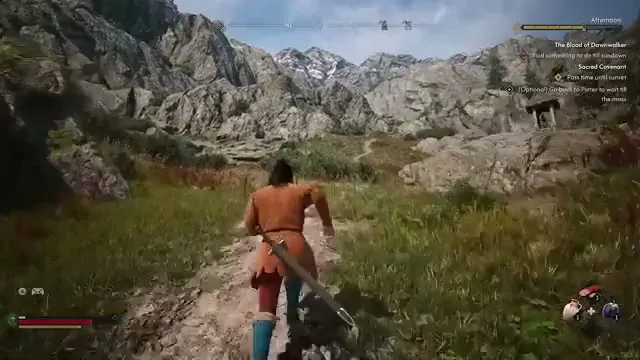
The Blood of Dawnwalker map coverage centers on Vale Sangora — a fictional fourteenth-century kingdom in the Carpathian Mountains (Hungary, Romania, and regional myth cited as inspiration) under Brencis’s vampire rule. Dense forests, swamps, peaks, medieval towns, and forgotten ruins fill an open world Rebel Wolves built in Unreal Engine 5. This locations guide names Laslea, Briar Sloughs, Svartrau, Court dominions, and major POI types (wayside shrines, Ancient Circles, haunted sites) with day/night reach notes — no fake map pins or km² claims. Verified September 3, 2026 · Steam.
Collector’s and Day 1 editions include a physical world map; in-game fog of war still rewards exploration. Interactive map tools are P1 — Stage 3 stays text-first with cross-links to quests for regional job names.
| Map fact | Detail |
|---|---|
| Setting | Vale Sangora · ~1347 plague era · Carpathian-inspired |
| Start region | Laslea Glen — Coen’s village |
| Capital | Svartrau City & Outskirts — silver association |
| Court split | Three dominions — Ambrus · Bakir · Xanthe |
| Travel hubs | Wayside shrines — fast travel · level · stash |
| Collectibles | Ancient Circles · Haunted Sites · Wisp hunts · treasure maps |
| Other named sites | Greifberg Castle · Lunar Manor · Yawning Burrow · Cursed Chasm · Middens · Svartrau Cathedral |
Matched by build plan, shared topics, and guide progression — not random related links.
Vale Sangora is the entire playable kingdom: a single open world of forests, plains, swamps, mountains, villages, and ruins rather than discrete loading-screen zones. Brencis seized control during the Black Death, cancelled old taxes, and imposed a blood tax — adults donate blood monthly while the weak are culled. That political layer colors every settlement icon on the map.
Exploration does not advance Coen’s thirty-day rescue clock by itself; you can walk the valley to reveal roads and vistas before spending segments on quests. Environmental storytelling includes traces of ancient civilization, destroyed shrines, and officer territories marked by Court presence.
The kingdom sits in a fourteenth-century fiction (~1347) with Carpathian cultural DNA — Hungarian and Romanian history, regional archaeology, and vampire folklore cited as inspiration in press materials. You are not navigating a modern atlas; expect renamed rivers, composite villages, and lore-first geography rather than GPS-accurate Eastern Europe.
Some launch reviews note sparse pockets in the open world — treat that as player reception, not a spec sheet. For routing, what matters is which biome hosts your next manual, boss, or Court job, not whether every hill has hand-placed loot. Dense quest clusters (Laslea early, Briar mid, Svartrau urban) anchor travel goals.
Wayside shrines act as network nodes — unlock one, and cross-valley commutes shrink. Until an interactive map ships, use shrine chains as your mental metro map: Laslea hub → outward spokes toward Briar and Svartrau.
Middens — named near Svartrau in public location lists — skew toward refuse, industry, or marginal districts rather than postcard tourism. These edges often host stealth routes, black-market dialogue, or night-only shortcuts. Treat them as urban fringe POI, not a separate map zone.
Laslea Glen (often shortened to Laslea) is Coen’s home — a peasant village where Blood Mass, family introductions, and first Dawnwalker mechanics land. Public quest names tied to the glen include The Firebrand, From Above, If a Tree Falls in a Forest, Bandit’s Treasure Map, and A Pilgrimage for Power: Bear Trouble. Uriash — a large ram-like warrior under Brencis — appears in Laslea in official materials.
Laslea teaches shrine stash loops, Anca’s witchcraft links, and first directional fights before the journal web widens. It remains reachable later for unresolved side icons — do not assume “leave village = close all glen quests.”
| Laslea fact | Detail |
|---|---|
| Role | Starting village · family home · tutorial density |
| Key NPCs | Coen’s family (Pieter, Esme, Lunka, Mirto) · Anca · villagers |
| Events | Blood Mass · failed transformation aftermath |
| Threats | Bandits · Uriash encounter (public footage) · local beasts |
| Quest flavor | Treasure maps · pilgrimage chains · bear trouble side |
Bandit’s Treasure Map is a frequent search because it teaches how map clues translate to ground landmarks without Court anger. Use Laslea to practice reading terrain before Briar stealth jobs.
St. Tyna’s Grove sits in early travel range — a forested pocket named in public location lists. Treat it as Laslea-adjacent exploration for herbs, ambushes, and minor POI until verified pins land on the interactive map.
Coen’s father Pieter, mother Esme (neurological disorder noted in story materials), and siblings including Lunka and Mirto tie emotional weight to Laslea icons. Main-path beats pull you away, but the map keeps reminding you why segments matter — family markers stay visible in journal pressure even when you are halfway across Vale Sangora.
Svartrau City & Outskirts function as the valley’s medieval capital — Svartrau Cathedral, Middens, urban rooftops, and civilian life by day. Silver is culturally tied to the city (“silver capital” in community summaries) and to Coen’s backstory: exposure in mines left him immune to Brencis’s transformation, creating the Dawnwalker state.
By day, Svartrau presents commerce, guards, and dialogue windows. By night, rooftops, back alleys, and vrakhiri infrastructure become the stealth playground — Shadowstep and wall-walking reach balconies human Coen cannot. Residents react to your choices across phases — infamy from feeding or murders changes greetings.
Named landmarks Greifberg Castle and Lunar Manor appear in public location compendiums as high-story or elite-vampire spaces — exact unlock conditions stay walkthrough/spoiler territory. Mark them mentally as late-map pins tied to Court narrative, not day-one sightseeing.
Underground sites Yawning Burrow and Cursed Chasm skew dungeon and horror biomes — likely night-favorable or mixed-form encounters. Bring consumables and feeding plans; passive human healing is limited per day and night.
Svartrau Cathedral appears in public compendiums as a visual anchor for the capital — useful for orienting when streams or treasure maps describe “the spire east of the market.” We do not pin interior loot until verified; treat the cathedral as a navigation reference and potential story gate.
Daytime Svartrau shows blood tax bureaucracy in ambient NPC behavior — civilians living under vrakhiri rule. Your reputation and infamy change which doors open without a fight. Map literacy here means knowing which districts tolerate Dawnwalkers versus which summon guards after a feeding incident.
Briar Sloughs (often Briar) is a swamp-forward region associated with Ambrus’s dominion and quest density: Under Watchful Eyes, Taking Back What’s Mine, Ambrus’s Collectors, Dungeons, Prisoners, plus POI work (Destroyed Shrines, Ancient Circle, Wisp Treasure Hunt). Expect surveillance themes, mud-slowed fights, and night stealth.
St. Tyna’s Grove offers forest contrast — quieter ambushes and early exploration beats between Laslea lessons and Briar’s Court pressure. Both regions illustrate how dominion borders feel in play: officer anger rises when you undermine local tax collectors or free prisoners.
| Region | Biome tone | Officer tie | Example POI quests |
|---|---|---|---|
| Briar Sloughs | Swamp · mud · watchtowers | Ambrus dominion | Destroyed Shrines · Ancient Circle · Wisp hunt |
| St. Tyna’s Grove | Forest grove | Early neutral — confirm borders in-game | Exploration + minor sides — names TBA |
| Laslea Glen | Pastoral village + glen | Pre-dominion tutorial | Treasure maps · pilgrimage bear trouble |
Briar is where Court anger stops being abstract — freeing Prisoners, raiding Dungeons, or sabotaging Collectors sends signals to Ambrus. Pair regional accepts with quests hourglass notes so you do not spend three swamp segments without stash space.
Even when segments do not tick, mud, visibility, and ambushes make Briar slow. Night Wolf Form or Shadowstep can skip treacherous ground human Coen must wade through — factor form choice into map planning, not just fast-travel clicks.
After conquering Vale Sangora, Brencis partitioned the kingdom into three dominions ruled by lieutenants Ambrus, Bakir, and Xanthe — each a boss-tier antagonist in public materials. The split is political geography, not three separate maps: borders blur in the open world, but quest journals and Court tab anger reveal who owns which misery.
| Dominion officer | Public association | Map / quest flavor |
|---|---|---|
| Ambrus | Swamp / Briar pressure · collectors and prisons | Destroyed shrines · dungeon chains |
| Bakir | Regional beats · servant Farkas named | Routes TBA — anger tracked in Court UI |
| Xanthe | Lieutenant dominion · late confrontation in lists | High-risk Court progression |
| Brencis | Capital-level rule · investiture deadline | Center of quest web — not a biome label |
Dominions affect spawned authority, quest availability, and dialogue tone — not hard invisible walls. You can physically enter another officer’s land early; consequences arrive through quests and anger, not loading-screen denial.
Speedrunners may focus one lieutenant to unlock powers; roleplayers may spread anger evenly to see more dialogue. Map planning is choose your antagonist, not paint-the-whole-map completion.
Greifberg Castle and Lunar Manor sit in the “elite landmark” bucket — likely late-game pins when Court story escalates. Do not assume early access because the physical collector map shows them; in-game gating may require lieutenant progress or main beats first.
Beyond towns, Vale Sangora scatters repeatable POI families that feed builds and completionists. Public lists emphasize wayside shrines, Ancient Circles, Haunted Sites, Destroyed Shrines (repair arcs), Wisp Treasure Hunts, and officer territories. Sacred Stones, Uriashi glyphs, and A Pilgrimage for Power tie witchcraft progression to geography.
| POI type | Player function | Day/night notes |
|---|---|---|
| Wayside shrines | Fast travel · XP spend · central stash chest | Both — hub safety higher by day |
| Ancient Circles | Witchcraft / lore challenges — Briar example quest | Often puzzle or combat — verify form |
| Haunted Sites | Hex manual and spirit encounter sources | Night skew — afterlife dialogue by day |
| Destroyed Shrines | Repair / restore fast-travel network | May tie to regional quest chains |
| Wisp Treasure Hunts | Collectible routing across biomes | Movement skills help at night |
| Treasure maps | Landmark riddles — Laslea bandit map famous | Usually ground travel — day readable |
Until you have a shrine network, chasing distant Ancient Circles wastes real playtime even if segments do not tick. Unlock stash + travel, then circle back for pilgrimage and wisp routes with consumables stocked.
Witchcraft manuals arrive from haunted locations, vendors, and other casters per official skill blogs. Haunted Sites on the map are build enablers, not optional flavor — mark them when planning hex routes on skills.
Community trophy guides reference tower locations for Bird’s-Eye View-style vista unlocks — vertical POI that reveal map chunks when climbed. These differ from shrines: they paint fog rather than offer stash menus. PowerPyx and similar day-one lists are good cross-checks once you want completion percentages; we link strategy here without duplicating every coordinate.
Officer territories mark where dominion law feels strongest — extra patrols, unique encounters, or quest density. They are not always bordered on the HUD; learn them by quest giver names and ambient vrakhiri presence instead of expecting Skyrim-style hold names on screen.
Search interest for “blood of dawnwalker map size” (~2.3k SIM volume) outruns official answers. Bandai Namco and Rebel Wolves have not published a km² or mile² figure in store materials reviewed here. Treat influencer comparisons to other open-world RPGs as unofficial estimates — useful for vibe, not for route math.
The world is one continuous Vale Sangora with multiple biomes, urban Svartrau, rural Laslea, swamp Briar, castles, caves, and peaks. 50–70 hour completion estimates imply substantial traversal when combined with narrative sandbox pacing — but real hours depend on exploration style, not a published map scale.
Collector’s 33 × 40 cm world map and Day 1 paper map are merchandise references, not datamined grids. In-game fog reveals as you walk — consistent with exploration-not-costing-time design from time system.
Practical players measure the map by shrine-to-shrine minutes and how many day/night cycles a cross-valley errand consumes — not by square footage. If a YouTube title claims an exact km² number without citing datamine or developer text, ignore it for routing decisions.
The same coordinates on the map are two different traversal layers. Human day opens markets, quest givers, and sword-friendly roads; vampire night opens roofs, wall routes, Shadowstep gaps, and stealth paths past guards — at the cost of Blood Hunger and civilian detection.
| Location element | Day (human) | Night (vampire) |
|---|---|---|
| Svartrau streets | Shops · dialogue · guards on patrol | Roof routes · back-alley feeding risk |
| Swamp / Briar | Visible paths · slower sword fights | Stealth bypass · beast threats |
| Shrines | Safe progression menus | Still usable — feeding before travel |
| Haunted Sites | Some spirit dialogue options | Stronger horror spawns — quest dependent |
| Locked doors | Human keys / NPC access | Vertical bypass if walls allow |
Because roaming is segment-free, a common route is human reconnaissance to mark doors and guards, then vampire execution when a quest accepts. Reverse when a beat needs hex magic or witness interviews only available in daylight.
Wolf Form and other Vampirism mobility perks shrink real playtime between distant POI — see skills for unlock costs that may themselves spend segments at shrines.
Border areas between dominions may hide Haunted Sites or Ancient Circles readable only with human Astral Communion-style beats in daylight. If a night run failed to trigger a puzzle, retry by day before assuming the POI is bugged — dual-layer design is intentional in preview coverage.
Laslea and St. Tyna’s Grove offer open sight lines by day; Svartrau and Briar introduce guard arcs and rooftop gaps at night. Map difficulty is not uniform — plan feeding stops before entering high civilian density grids on the capital map.
No official km² published — multi-biome open Vale Sangora; ignore unsourced size comparisons.
Laslea Glen — Coen’s village and prologue hub before the valley widens.
Ambrus, Bakir, and Xanthe — Brencis lieutenants whose territories shape quests and Court anger.
Fast-travel nodes that also handle leveling, skill spends, and stash inventory transfer.
Yes — travel and observation alone do not consume rescue segments.
Yes for witchcraft and regional quest chains — Briar hosts a named Ancient Circle beat.
Quests for regional job names, then walkthrough for spoiler routing.
September 3, 2026
Matched by build plan, shared topics, and guide progression — not random related links.